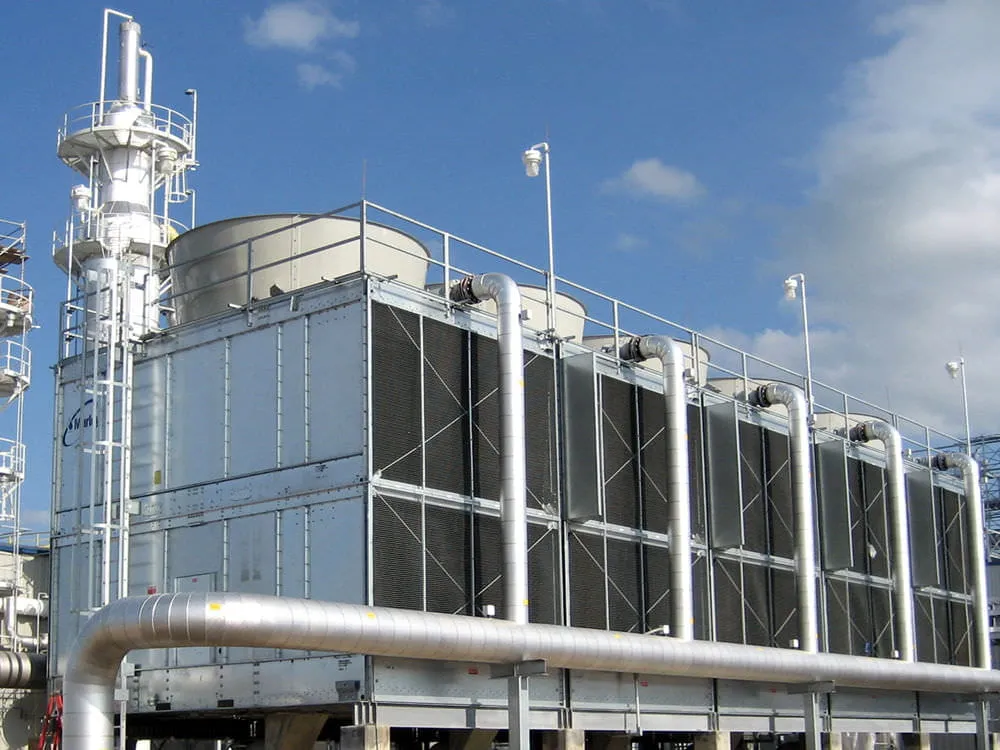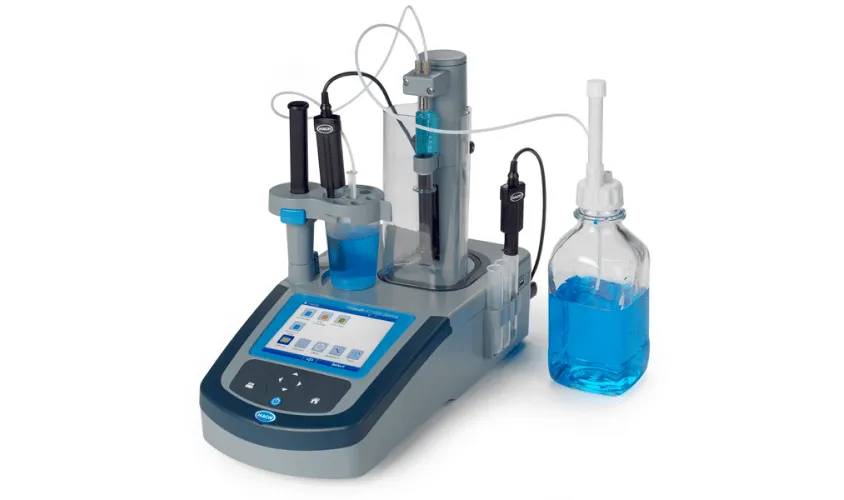
A cooling tower treatment program lives or dies on dosing accuracy. The same scale inhibitor, corrosion inhibitor, and biocide chemistry can deliver very different real-world results depending entirely on how precisely it is fed relative to makeup water flow, system volume, and blowdown cycles. This guide covers the dosing strategies specific to each chemical category, how to size and maintain the equipment delivering them, and the daily habits that keep a cooling tower dosing program actually working rather than just running.
Importance of Proper Chemical Dosing
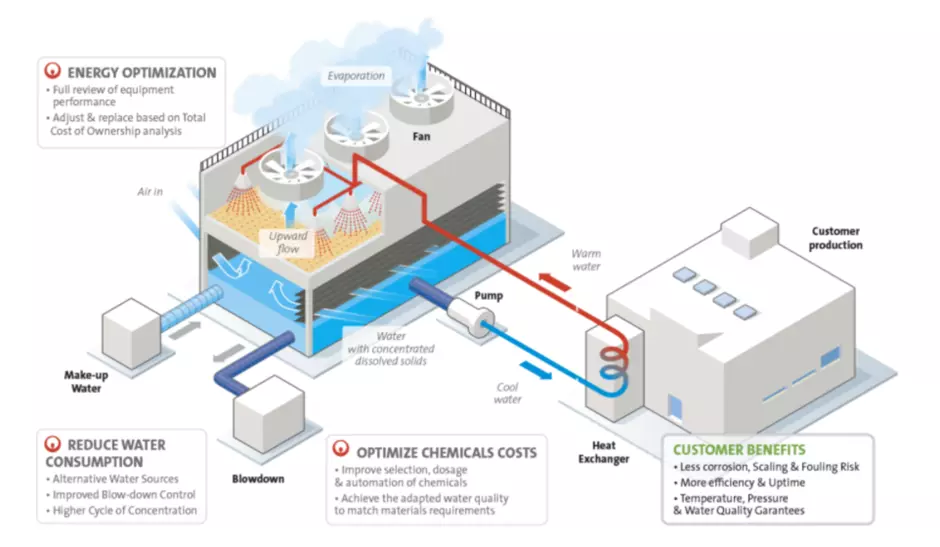
Underdosing a cooling tower leaves it exposed to scale, corrosion, or biological fouling because the chemical residual never reaches the concentration needed to do its job; overdosing wastes chemical directly and, in the case of biocides, can create discharge and cost concerns without a corresponding improvement in control. Correct dosing in a cooling tower is complicated by the fact that the system is continuously losing water to evaporation, drift, and blowdown, meaning dosing has to account for a constantly shifting water balance, not a fixed volume the way a closed system would.
This water balance shifts with weather, production schedule, and cooling load in ways that are easy to underestimate. A hot, dry week increases evaporation and therefore makeup water demand; a lower-production period reduces heat load and cooling water flow. A dosing rate calculated once against average conditions will systematically under- or over-treat the system during whichever periods deviate from that average, which is exactly why dosing tied to a real-time flow signal (rather than a fixed timer or manual schedule) tends to perform more consistently across seasonal and operational swings.
Continuous Dosing
Continuous dosing feeds chemical at a steady rate proportional to makeup water flow or blowdown rate, keeping scale and corrosion inhibitor residuals relatively stable over time. It is the standard approach for these two chemical categories, since they perform best when maintained at a consistent concentration rather than allowed to swing between depleted and excess as the system cycles.
Shock Dosing
Shock dosing delivers a large, concentrated dose of biocide over a short period, intended to rapidly knock down an established or surging microbial population rather than maintain a steady low-level residual. It is typically used periodically alongside continuous or scheduled biocide dosing, and is also the standard response when microbiological testing or visible biofouling indicates the regular program has fallen behind.
Dosing Pumps
Cooling tower dosing pumps are typically sized against blowdown rate or makeup water flow, whichever the specific chemical's feed strategy is tied to, with enough turndown range to dose accurately across the system's full operating load range. As with any dosing system, periodic calibration, verifying actual delivered volume against the pump's setting, is essential, since a pump that has drifted out of calibration will silently change the entire program's effectiveness without any visible indication on the control panel.
A practical calibration check is to run the pump for a fixed, timed interval into a graduated container and compare the actual volume delivered against what the pump's setting predicts. Doing this on a regular schedule, and immediately after any maintenance work on the pump or its tubing, catches drift caused by diaphragm wear, tubing degradation, or a partially clogged injection point before it shows up as an unexplained water chemistry problem weeks later.
Scale Inhibitor Programs
Scale inhibitor dosing should be calculated against makeup water hardness and the system's target cycles of concentration, since both directly determine how much scale-forming mineral load the inhibitor needs to keep dispersed. A dosing rate that was correct for one cycles-of-concentration target will under-protect the system if cycles are later increased without a corresponding review of the inhibitor feed rate.
Corrosion Inhibitor Programs
Corrosion inhibitor dosing is generally maintained at a steady residual concentration verified by routine testing, since the protective film these chemistries form on metal surfaces depends on consistent exposure rather than periodic peaks. Gaps in corrosion inhibitor residual, even temporary ones caused by a dosing interruption, can allow localized corrosion to initiate in a way that is not fully reversed simply by resuming normal dosing afterward.
Biocide Programs
Biocide dosing strategy depends on the chemistry: oxidizing biocides are often fed continuously or on a frequent schedule timed around blowdown cycles to maximize contact time before treated water is discharged, while non-oxidizing biocides are more commonly used in periodic shock or rotating doses. Many programs deliberately alternate biocide types over time specifically to prevent microbial populations from adapting to a single control mechanism, which is a real risk with prolonged reliance on one chemistry alone.
Rotation schedules should be documented rather than left to whoever happens to be reordering chemical stock at the time: an informal rotation that depends on which product is in supply that month is not the same as a deliberately designed alternation strategy, and the difference matters when microbiological testing later needs to explain why control suddenly weakened.
Biodispersant Programs
Biodispersants are typically dosed shortly before or alongside a biocide application, since their role is to break down existing biofilm structure and expose the organisms within it to the biocide that follows. Dosing a biodispersant without a biocide application to follow it, or vice versa, generally produces a weaker result than coordinating the two as a deliberate sequence.
pH Control
pH affects both scale formation (higher pH generally increases calcium carbonate scaling tendency) and corrosion (low pH accelerates metal loss, particularly for the mixed metallurgy common in cooling towers), making it one of the more consequential parameters to hold within the range the chemical program was designed around. pH should be tested frequently enough to catch drift before it meaningfully shifts scale or corrosion risk, not checked once and assumed stable.
Makeup water pH and alkalinity are not the only inputs that move cooling tower pH: biological activity itself can shift pH over time as organisms consume or produce compounds that affect it, and blowdown rate changes the buffering capacity of the water remaining in the system. This is one of the reasons pH drift sometimes shows up alongside a biofouling problem rather than as an isolated water chemistry issue, and worth checking together rather than treating as two unrelated readings.
Conductivity Control
Conductivity serves as a fast, practical proxy for total dissolved solids and is the parameter most directly used to control blowdown and cycles of concentration in real time. Continuous or frequent conductivity monitoring allows blowdown to be adjusted promptly as conditions change, rather than waiting for a periodic laboratory TDS test to reveal that cycles have already drifted outside the target range.
Cycles of Concentration
Cycles of concentration is the direct result of the balance between makeup water quality, blowdown rate, and evaporation, and it determines how concentrated every dissolved chemical (both the minerals in the makeup water and the treatment chemicals themselves) becomes inside the tower. Because chemical dosing is often calculated relative to makeup water flow, changing cycles of concentration without reviewing chemical dosing rates is one of the more common ways a previously well-tuned program drifts out of alignment.
Blowdown Optimization
Blowdown rate should be set to hold cycles of concentration at the target verified safe for the current chemical program and makeup water quality, not minimized purely for water savings without regard to the resulting concentration of dissolved solids. Automated conductivity-based blowdown control can hold this target more precisely than manual adjustment, though the conductivity sensor itself still needs periodic calibration verification to remain trustworthy.
Water Testing
Testing is what confirms the dosing program is achieving its intended chemistry, not an optional add-on to dosing itself. At minimum, a functioning program tests pH, conductivity/TDS, and the relevant inhibitor or biocide residual on a fixed schedule, with results logged and reviewed for trend rather than checked only against a single pass/fail threshold.
Periodic microbiological testing (a dip-slide count or laboratory culture, depending on what the program calls for) fills a gap that daily chemical testing cannot: it directly measures whether the biocide program is actually controlling microbial load, rather than inferring control from the fact that biocide was dosed on schedule. A biocide feeding correctly by pump log can still be failing to control biological growth if dosing rate, contact time, or rotation strategy isn't matched to the system's actual bioload, and microbiological testing is the only way to catch that gap directly.
Daily Inspection Checklist
- Confirm all dosing pumps are running and chemical tanks have adequate supply.
- Record cooling tower water pH, conductivity/TDS, and relevant chemical residuals.
- Compare current readings against target range and the previous shift's results.
- Visually inspect the basin, distribution deck, and fill media for scale, sediment, or biological growth.
- Note and investigate any reading outside target range before the next shift, rather than carrying it forward unresolved.
Common Dosing Mistakes
- Setting dosing rates once and never revisiting them as cycles of concentration or system load change.
- Relying on a single biocide chemistry indefinitely rather than rotating or combining types.
- Dosing biodispersant and biocide independently rather than as a coordinated sequence.
- Assuming a full chemical tank means the dosing pump is actually delivering chemical.
- Adjusting a dosing rate in response to a test result without first checking whether blowdown or makeup water quality changed.
Safety Guidelines
Cooling tower treatment chemicals range from mildly irritating to corrosive or oxidizing depending on the product, particularly biocides. Always consult the specific product's safety data sheet before handling, use the personal protective equipment it specifies, and ensure adequate ventilation in chemical storage and dosing areas. Never mix biocide products directly with each other or with other treatment chemicals outside their designed dosing points, since incompatible chemistries can react dangerously.
Conclusion
Cooling tower dosing carries an added layer of complexity that boiler dosing does not: the constant water balance shifts from evaporation, drift, and weather mean a rate calculated once rarely stays correct indefinitely. Dosing is where a well-formulated cooling tower chemical program either delivers its intended protection or quietly falls short. Matching dosing strategy to each chemical category (continuous for scale and corrosion inhibitors, scheduled or shock for biocides, coordinated sequencing for biodispersants) and confirming it all with routine testing is what separates a program that protects the system from one that simply consumes chemical on a schedule.
Call to Action
Carbolabs Corporation can review your current cooling tower dosing setup (pump sizing, calibration, and testing routine) and recommend adjustments to get more reliable protection from your existing chemical program. Speak with our technical team about your dosing program.