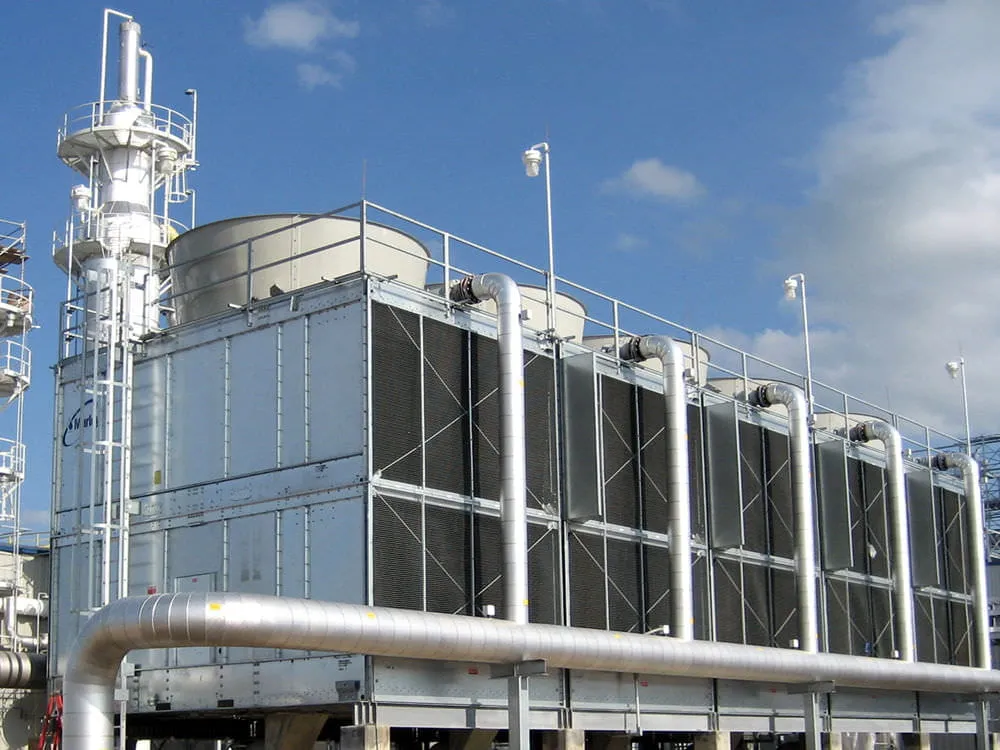
Scale, corrosion, and biological fouling are the three failure mechanisms responsible for nearly every cooling tower efficiency loss and unplanned shutdown. They develop differently and require different controls, but all three accelerate each other when left unmanaged: scale creates the uneven surfaces biofilm colonizes more easily, and biofilm in turn creates the localized conditions that accelerate corrosion underneath it. This guide breaks down how each mechanism actually develops and the concrete program that controls all three together.
What Causes Scale
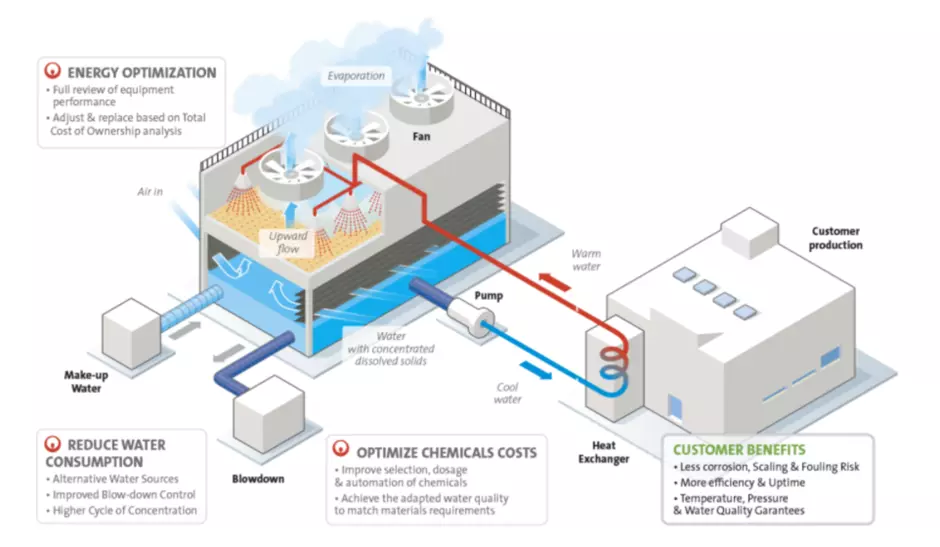
Scale forms when dissolved minerals in cooling tower water exceed their solubility limit as the water concentrates through repeated evaporation cycles, precipitating directly onto heat exchanger surfaces, fill media, and piping walls. Because cooling towers concentrate water continuously by design, scale risk is inherent to how the equipment works: it is managed, not eliminated, through cycles of concentration control and scale inhibitor dosing.
Calcium Carbonate Scaling
Calcium carbonate is the most common cooling tower scale, forming when calcium hardness and alkalinity in the makeup water concentrate past their solubility point, particularly as temperature rises across the heat exchanger surface. It typically appears first at the hottest points in the system, since solubility decreases as temperature increases, meaning the heat exchanger surface itself, the very equipment the treatment program exists to protect, is usually the first place calcium carbonate scale actually forms.
This inverse-solubility behavior is part of why calcium carbonate scale is so persistent once it begins: the hottest part of the heat exchanger is also the part with the least solubility margin, so scale tends to grow fastest exactly where it does the most damage to heat transfer efficiency. A scale inhibitor program that looks adequate based on bulk water testing can still allow localized precipitation at these hot-surface microenvironments if the dosing rate wasn't calculated with this effect in mind.
Silica Scale
Silica scale forms when dissolved silica in the makeup water concentrates past its solubility limit, producing a hard, glassy deposit that is generally more difficult to remove than calcium carbonate scale once it has formed. Because silica solubility is less responsive to standard scale inhibitor chemistry than calcium-based scales, silica-prone makeup water often requires a specifically selected inhibitor program and a lower maximum cycles of concentration limit than a calcium-dominant water source would need.
Corrosion Mechanisms
Cooling tower corrosion is driven primarily by dissolved oxygen (abundant by default since the system is open to atmosphere), combined with pH excursions and the concentration of aggressive ions such as chlorides through repeated evaporation cycles. Unlike a boiler, where oxygen can be substantially removed through deaeration, a cooling tower's open design means oxygen is always present, making corrosion inhibitor film formation the primary practical control rather than oxygen removal.
Galvanic Corrosion
Galvanic corrosion occurs when two dissimilar metals are in electrical contact within the same water circuit, creating a natural electrochemical cell where the more reactive metal corrodes preferentially to protect the less reactive one. Cooling tower systems commonly combine steel piping, copper or copper-alloy heat exchanger tubes, and sometimes aluminum or galvanized components, meaning galvanic corrosion is a real, structural consideration in cooling tower corrosion control in a way that more metallurgically uniform systems do not need to account for as heavily.
The practical implication is that a corrosion inhibitor program needs to protect multiple metal types simultaneously, and a chemistry optimized purely for steel can leave copper or galvanized components under-protected, or vice versa. This is one of the reasons a generic, one-size-fits-all inhibitor blend often underperforms compared to a program specifically selected against the actual metallurgy present in a given system's piping, tubing, and tower construction.
Biological Fouling
Biological fouling covers the full range of organic growth a cooling tower can host: algae, bacteria, fungi, and the biofilm they collectively form on wetted surfaces. Because a cooling tower provides warmth, aeration, sunlight in exposed areas, and a constant nutrient supply from airborne dust and organic debris, biological fouling is not a question of if but of how well it is controlled.
Algae Growth
Algae requires sunlight, and in a cooling tower it typically establishes first in the basin, distribution deck, and any other sunlit, wetted surface. Beyond being unsightly, algae growth can shed material that fouls strainers and fill media downstream, and provides additional organic material that supports further bacterial growth throughout the system.
Slime Formation
Slime is the visible, often slippery buildup that forms when bacteria and their extracellular secretions accumulate on wetted surfaces, typically in areas with lower flow velocity where the buildup is not continuously washed away. Slime restricts water flow, insulates heat transfer surfaces much like scale does, and provides a foothold for more established biofilm to form on top of it.
Biofilm
Biofilm is a more mature, structured microbial community encased in a self-produced protective matrix, and it is considerably harder to control than the loose slime that precedes it: the matrix itself shields the organisms inside from biocide penetration, which is why an established biofilm typically requires a biodispersant to break down the matrix before biocide dosing can reach the organisms effectively.
This is why biocide dosing that appeared to work well for months can suddenly seem ineffective: once biofilm reaches a certain maturity, the biocide is genuinely failing to penetrate the matrix, not failing as a chemistry. Recognizing this distinction changes the correct response: the fix is adding a biodispersant to break down the existing matrix, not simply increasing the biocide dose or switching to a different biocide entirely.
Legionella Awareness
Legionella bacteria can proliferate within cooling tower biofilm and become airborne through the tower's normal drift, representing a genuine public health consideration that facilities should take seriously. Legionella risk management involves regionally specific health and safety guidance; facilities should consult the applicable local regulatory framework and work with a qualified water treatment provider on monitoring and control, since a general biocide program alone is not a substitute for a structured Legionella risk assessment.
Blowdown Control
Blowdown is the primary mechanical control on dissolved solids concentration in a cooling tower, directly determining the cycles of concentration the system operates at. Blowdown that is too infrequent allows dissolved solids to climb past the level the chemical program was designed to handle, directly increasing scale risk; blowdown that is excessive wastes water and chemical without a corresponding benefit. The correct rate is one matched to actual makeup water quality and verified by conductivity testing, not a fixed setting left unreviewed.
Seasonal changes matter here more than they might for a boiler: ambient temperature and humidity directly affect how much water a cooling tower evaporates for a given cooling load, which in turn changes how quickly dissolved solids concentrate and how often blowdown needs to run to hold the same cycles of concentration target. A blowdown rate set correctly during a cooler, more humid season can leave the system running at a higher-than-intended concentration once conditions shift, which is a specific reason to verify blowdown settings periodically rather than assuming a single calculation holds true year-round.
Water Softening
Where makeup water hardness is high, softening before it reaches the cooling tower reduces the calcium load the scale inhibitor program has to manage, often allowing higher, more water-efficient cycles of concentration than untreated hard makeup water would safely permit. Softening is a pretreatment decision made at the makeup water source, working alongside, not instead of, the ongoing chemical program inside the tower itself. The decision to add softening is generally an economic one: the cost of the softening equipment and regenerant is weighed against the water, chemical, and blowdown savings achieved by operating at higher cycles, a calculation worth revisiting whenever makeup water hardness or utility costs change materially.
Side Stream Filtration
Side stream filtration continuously processes a small percentage of the circulating water through a filter to remove suspended solids, dust, and organic debris before they can settle into fill media or contribute nutrients to biological growth. It is a mechanical complement to chemical treatment, particularly valuable for towers in dusty environments or those experiencing persistent sediment or biological fouling despite an otherwise well-run chemical program.
Chemical Treatment Programs
A complete program combines scale inhibitors, corrosion inhibitors, an oxidizing and/or non-oxidizing biocide rotation, and biodispersants as needed, each addressing a distinct mechanism, with blowdown and any mechanical pretreatment (softening, filtration) working alongside the chemistry rather than being treated as a separate concern. Programs built around a single chemical category consistently leave the mechanisms that chemical doesn't address unmanaged.
Preventive Maintenance Checklist
- Test cooling tower water pH, conductivity/TDS, and biocide residual on a fixed schedule.
- Verify blowdown rate against actual cycles of concentration targets using conductivity testing.
- Inspect fill media, basin, and distribution deck periodically for scale, sediment, or biological growth.
- Rotate biocide chemistries rather than relying on a single product indefinitely.
- Review the chemical program whenever makeup water source or system load changes materially.
- Confirm side stream filtration or basin sweeper systems, if installed, are functioning correctly.
Troubleshooting
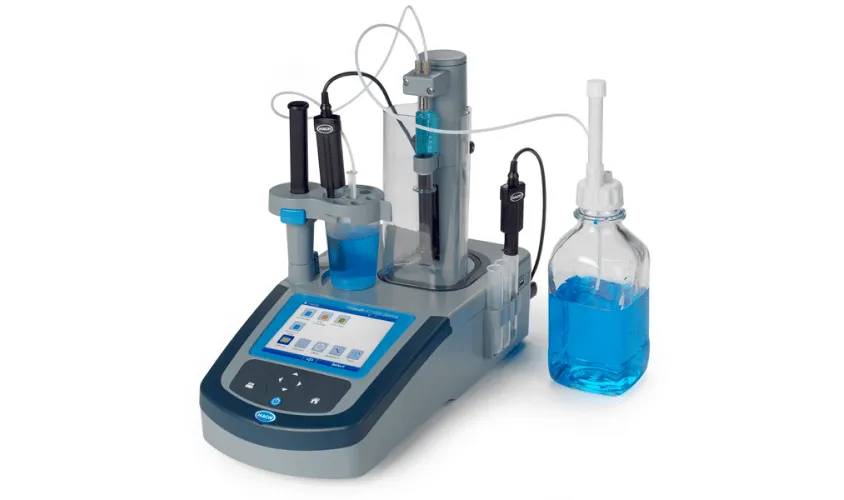
When scale, corrosion, or biofouling symptoms appear, the diagnostic path should start with water testing rather than assumption: confirm current pH, hardness, conductivity, and biocide residual against target ranges, review recent blowdown records against actual cycles of concentration, and check whether makeup water source or system load has changed. A symptom that looks like a chemical failure is often a mechanical one: a stuck blowdown valve or a failed dosing pump can produce the same visible result as an incorrectly formulated chemical program, so ruling out the mechanical side first avoids chasing the wrong fix.
Keeping a combined log (water test results, blowdown records, biocide dosing history, and any mechanical maintenance performed) in one place rather than scattered across separate records makes this kind of correlation far easier to spot. A scale problem that started the same week a blowdown valve began sticking is a very different repair job than a scale problem that developed gradually over months with no clear trigger, and only a combined record reveals which situation is actually occurring.
Conclusion
Scale, corrosion, and biological fouling are not three separate problems to solve independently: they are interconnected mechanisms that reinforce each other in an open, evaporative system by design. A cooling tower program built around correct cycles of concentration, blowdown control, and a properly rotated chemical treatment strategy addresses all three together, rather than treating each as an isolated symptom to manage as it appears.
Call to Action
If your cooling tower is showing early signs of scale, corrosion, or biological fouling, or you simply want a second opinion on your current program, Carbolabs Corporation's technical team can review your water test history and system condition and recommend a treatment plan. Contact our engineers to get started.