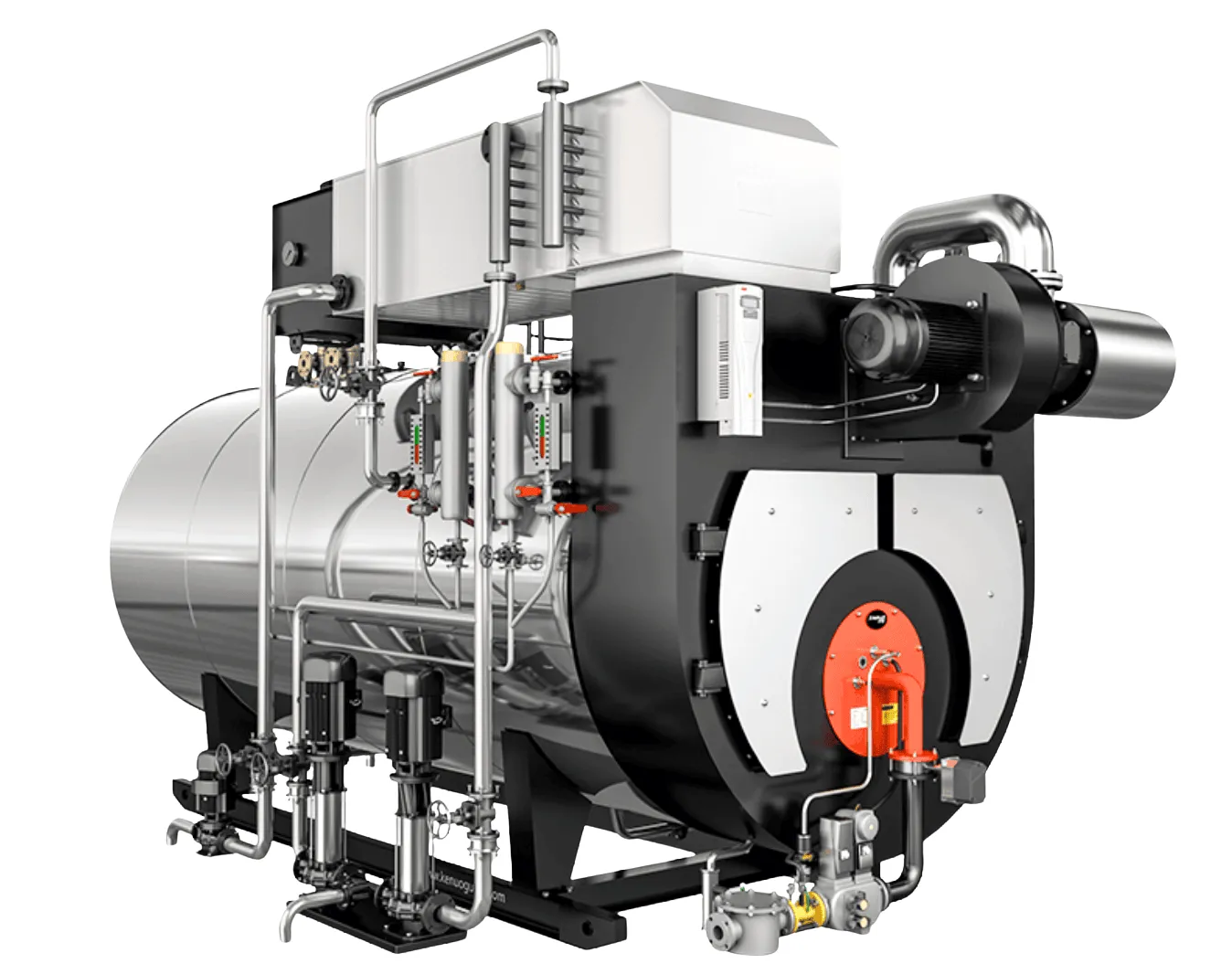
Blowdown is one of the simplest mechanical operations on a boiler, and one of the most commonly mismanaged. Get it right and it quietly controls dissolved solids, prevents carryover, and protects the water treatment program working alongside it. Get it wrong, whether too little or too much, and it either lets problems build up invisibly or wastes treated water, chemical, and fuel every single day. This guide covers how blowdown actually works, how the rate is determined, and the practical habits that keep it under control.
What Is Boiler Blowdown
Blowdown is the deliberate removal of a portion of boiler water to control the concentration of dissolved and suspended solids that build up as the boiler continuously produces clean steam while leaving impurities behind. Because pure steam leaves the drum but the minerals dissolved in the feedwater do not, boiler water becomes progressively more concentrated the longer it operates without blowdown, eventually reaching levels that cause scale, carryover, or foaming if left unchecked.
It helps to picture the boiler as a container that is constantly being topped up with feedwater while pure steam continuously exits. Every mineral that enters with the feedwater has to go somewhere, and without blowdown, "somewhere" is simply a rising concentration inside the boiler itself. Blowdown is the release valve on that buildup, deliberately discharging a controlled portion of the concentrated water so the boiler settles into a steady-state concentration instead of climbing indefinitely.
Why Blowdown Matters
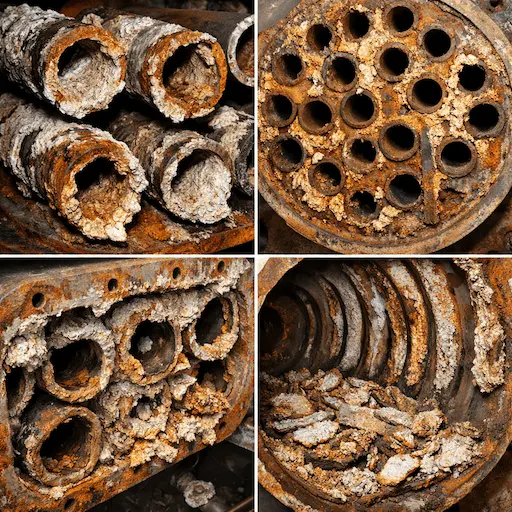
Blowdown is the primary mechanical control on total dissolved solids (TDS) and suspended solids in the boiler, working alongside, not instead of, the chemical treatment program. Even a well-designed chemical program cannot compensate for a boiler that never blows down, since chemicals manage the behavior of dissolved and suspended solids, not their total concentration. Correct blowdown keeps TDS within the range appropriate for the boiler's design pressure, reduces carryover risk, and removes settled sludge before it has a chance to bond onto hot surfaces as scale.
It is worth being explicit about the division of labor here: chemical treatment and blowdown are not substitutes for each other, they are two halves of the same control system. Scale inhibitors and dispersants keep hardness and solids from bonding onto surfaces, but if blowdown never removes those suspended solids from the boiler, they simply accumulate in the water indefinitely, eventually overwhelming even a well-dosed chemical program. Conversely, blowdown alone, with no chemical treatment, cannot prevent scale formed from hardness that was never removed by pretreatment in the first place. Both need to be functioning correctly at the same time.
Types of Blowdown
Surface (Continuous) Blowdown
Surface blowdown draws water from just below the boiler's normal water line, where dissolved solids concentrate most, and is typically run continuously or near-continuously at a rate proportional to feedwater flow. Because it targets dissolved solids specifically, surface blowdown is the primary tool for controlling TDS and reducing carryover risk.
Bottom (Intermittent) Blowdown
Bottom blowdown draws from the lowest point of the boiler drum or mud drum, where settled sludge and suspended solids collect. It is typically run intermittently, as a short, deliberate opening of the bottom blowdown valve on a fixed schedule, rather than continuously, since its purpose is to physically flush out accumulated solids before they can bond into scale, not to fine-tune TDS.
A common operational mistake is treating bottom blowdown as optional whenever the boiler "looks fine" at the water gauge. Sludge accumulation happens at the bottom of the drum, out of view, and a clean-looking water line gives no information about what has settled below it. Sticking to the documented bottom blowdown schedule regardless of how the boiler appears day to day is what actually prevents this particular blind spot from turning into a scale problem months later.
How Blowdown Rate Is Determined
Blowdown rate is fundamentally a function of feedwater TDS, the maximum TDS the boiler can tolerate at its operating pressure, and the rate of makeup water entering the system. In general terms, a higher feedwater TDS or a lower maximum allowable boiler TDS both require a higher blowdown percentage to keep the boiler within range. Boiler manufacturers typically publish a maximum TDS limit for their specific design and pressure, and this figure, not a generic industry number, should be the actual target used for blowdown calculations.
In practice, most facilities set blowdown rate using a combination of the manufacturer's maximum TDS guidance and real-time conductivity monitoring, adjusting the rate periodically as feedwater quality or boiler load changes, rather than calculating a single fixed percentage once and leaving it untouched indefinitely.
A simple way to sanity-check whether a blowdown rate still makes sense is to compare it against how much makeup water the boiler is actually consuming: if makeup water volume has increased noticeably (a new production line, a change in condensate return volume, a leak in the system) without a corresponding review of blowdown rate, the boiler is very likely operating with an outdated blowdown setting relative to its current feedwater load, even if nobody has changed the blowdown valve setting itself.
Automated vs Manual Blowdown Control
Manual blowdown relies on an operator periodically checking conductivity or TDS and adjusting a valve accordingly, workable for smaller boilers with attentive staff, but vulnerable to the same lapse-in-routine risk as any manually-triggered task. Automated blowdown control uses a continuous conductivity sensor to modulate a control valve in real time, holding TDS closer to the target range with less dependence on operator timing. Automation reduces water, chemical, and heat losses compared to a conservatively-set manual rate, but the conductivity sensor itself still needs periodic calibration verification against a handheld meter. An automated system quietly reading incorrectly will maintain the wrong TDS level with complete consistency, which is a failure mode manual systems are less prone to since a human is periodically double-checking the raw number.
Many facilities land on a hybrid approach in practice: automated continuous blowdown control for day-to-day operation, paired with a manual conductivity or TDS check on a fixed schedule specifically to confirm the automated system's sensor reading against an independent measurement. This combination captures most of the water and energy savings of automation while retaining the human cross-check that catches a slowly-drifting sensor before it causes a real problem.
Blowdown and Heat Recovery
Blowdown water leaves the boiler at or near operating temperature, carrying real thermal energy with it, a cost that is easy to overlook since it doesn't show up as a separate line item the way fuel or chemical costs do. Flash tanks and blowdown heat exchangers are commonly used to recover this energy, using flash steam to preheat feedwater or using the residual heat in the cooled blowdown stream directly, meaningfully reducing the net energy cost of a properly-run blowdown program. Facilities running blowdown at a high, unrecovered rate are often paying for this loss without realizing how much of the "cost of blowdown" is really a cost of not recovering the heat already paid for.
Whether heat recovery equipment is worth installing generally comes down to how much blowdown volume the boiler runs and how many operating hours per year justify the payback period on the equipment. A boiler with modest, well-controlled blowdown may not see enough volume to justify a dedicated flash tank, while a higher-pressure boiler with a naturally higher blowdown requirement often recovers the investment relatively quickly simply because there is more thermal energy leaving with the blowdown stream to begin with.
Common Blowdown Mistakes
- Setting a fixed blowdown rate once and never revisiting it as feedwater source or boiler load changes.
- Running bottom blowdown on a schedule that is too infrequent to prevent sludge accumulation between cycles.
- Relying on a conductivity sensor's automated control without periodically verifying its calibration against a handheld meter.
- Treating blowdown as purely a water-loss cost without accounting for the chemical and heat lost alongside it, which usually makes the true cost of over-blowdown larger than it first appears.
- Assuming a boiler with no recent scale or carryover complaints must have correct blowdown, rather than confirming it directly through TDS testing.
- Reducing blowdown rate to cut costs without first confirming TDS is still within the boiler manufacturer's limit.
Blowdown Testing and Monitoring
Testing is what confirms a blowdown rate is actually correct rather than assumed correct. At minimum, a functioning program tests boiler water conductivity or TDS on a fixed schedule appropriate to boiler pressure and criticality, logs the results, and reviews the trend rather than checking only whether today's reading passes a threshold. A conductivity reading that is technically within range but trending upward over several days is a useful early signal that blowdown rate, feedwater quality, or boiler load has shifted, worth investigating before it crosses the limit, not after.
Keeping blowdown test results in the same log as feedwater quality, chemical dosing, and boiler load information, rather than a separate, disconnected record, makes it far easier to spot when a TDS trend correlates with a specific change elsewhere in the system. A rising TDS trend that started the same week a new feedwater source came online, for example, points directly at the actual cause in a way that an isolated blowdown log entry never would on its own.
Maintenance Checklist
- Verify current blowdown rate against the boiler manufacturer's maximum TDS limit, not a generic industry figure.
- Confirm bottom blowdown is completed on the documented schedule, not skipped when the boiler looks clean.
- Test boiler water conductivity/TDS on a fixed schedule and log results for trend review.
- Calibrate automated conductivity sensors against a handheld meter on a regular schedule.
- Review blowdown rate whenever feedwater source, boiler load, or makeup water percentage changes.
- Inspect flash tank and heat recovery equipment, if installed, during planned shutdowns.
Conclusion
Blowdown is a simple mechanical control that has an outsized effect on boiler reliability and efficiency. Setting the rate correctly against the manufacturer's actual TDS limit, splitting responsibilities correctly between continuous surface blowdown and intermittent bottom blowdown, and verifying the rate with real testing rather than assumption is what separates a boiler that runs cleanly for years from one that quietly accumulates the conditions for scale, carryover, or unplanned downtime.
None of this requires exotic equipment or a large capital investment to get right. In most cases, it requires a correctly calculated target, a conductivity meter used consistently, and a log that connects blowdown results to everything else happening in the water treatment program. Facilities that treat blowdown with the same discipline as chemical dosing tend to see the benefit compound over time in the form of fewer surprises during inspections.
Call to Action
Carbolabs Corporation's technical team can review your current blowdown practice against your boiler's actual feedwater quality and manufacturer limits, and recommend adjustments that improve both reliability and efficiency. Talk to our engineers about your blowdown program.