A well-formulated boiler chemical is only as effective as the dosing system delivering it. Two facilities can buy the exact same oxygen scavenger and scale inhibitor and see very different results, simply because one doses accurately and consistently while the other treats dosing as an afterthought. This guide covers how continuous and batch dosing actually work, how to size and maintain dosing pumps, and the daily practices that keep a dosing program reliable.
Importance of Proper Chemical Dosing
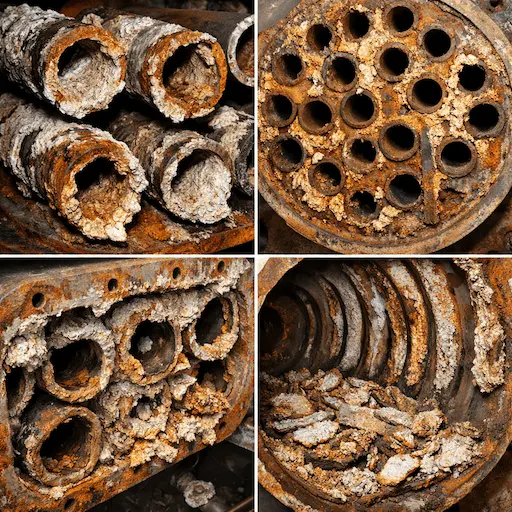
Underdosing and overdosing are both expensive, just in different ways. Underdosing leaves the boiler exposed to scale, corrosion, or carryover because the chemical residual never reaches the level needed to do its job. Overdosing wastes chemical directly, and in some cases creates its own problems: excess alkalinity builder can push pH too high, and excess dispersant can affect steam purity. Correct dosing is not a "more is safer" situation; it is a target range that needs to be hit and verified, not approximated.
Continuous Dosing
Continuous dosing feeds chemical into the feedwater line at a steady rate proportional to feedwater flow, keeping chemical residuals relatively stable over time. It suits boilers with fairly consistent load profiles and is the standard approach for scale inhibitors, oxygen scavengers, and alkalinity builders in most industrial boiler installations, since these chemicals work best when maintained at a steady residual rather than allowed to swing between empty and excess.
The practical advantage of continuous dosing is that it removes a layer of dependence on operator memory. Once a metering pump is correctly calibrated to feedwater flow, chemical delivery scales up and down automatically as the boiler's demand changes, rather than relying on someone remembering to add another shot as load increases through a shift. The tradeoff is that continuous systems have more components (a metering pump, a feed line, often a flow-proportioning signal from the feedwater system), each of which needs its own upkeep to keep the whole chain reliable.
Batch Dosing
Batch (or shot) dosing adds a measured quantity of chemical directly into the boiler drum at set intervals rather than continuously. It is more commonly used for chemicals where a periodic slug dose is chemically appropriate, and for smaller boilers where installing a full continuous metering system is not practical. Batch dosing demands more operator discipline, since missing a scheduled dose creates a gap in protection that continuous dosing would not.
Dosing Pumps
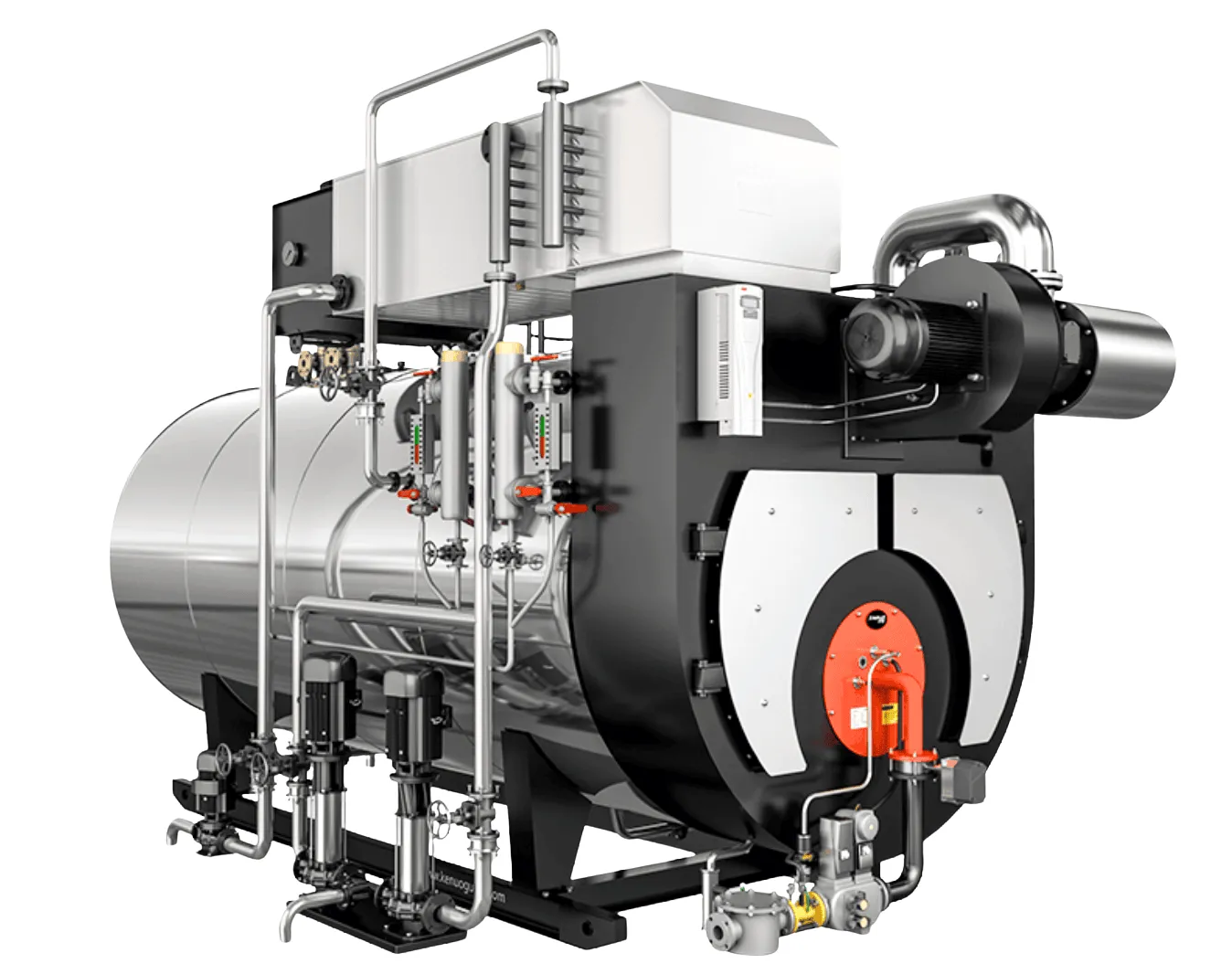
Most continuous dosing systems use a metering (dosing) pump, commonly a diaphragm or peristaltic type, sized to deliver a precise, adjustable chemical flow rate matched to feedwater flow. Pump sizing should account for the boiler's maximum feedwater flow rate and the target chemical concentration, with enough turndown range to also dose accurately at reduced loads. A pump that is oversized for the application will struggle to deliver small, accurate doses at low flow; a pump that is undersized will not keep up at peak demand.
Routine pump calibration, verifying the actual delivered flow rate against the pump's setting, is one of the most commonly skipped maintenance tasks, and one of the most consequential. A pump that has drifted 20% out of calibration silently changes the entire chemical program's effectiveness, even though nothing on the control panel indicates a problem.
A simple, low-cost calibration check is to run the pump for a fixed, timed interval into a graduated cylinder or measuring container and compare the actual volume delivered against what the pump's setting predicts. Doing this quarterly, or whenever a chemical residual test result looks unexpectedly off, catches drift caused by diaphragm wear, tubing degradation, or a partially clogged injection nozzle long before it becomes a scale or corrosion problem downstream.
Feed Water Treatment
Dosing decisions start with feedwater quality. A boiler running on well-softened, low-hardness feedwater needs a very different scale inhibitor dosing rate than one occasionally receiving hard water during a softener malfunction. Feedwater hardness, dissolved oxygen, alkalinity, and flow rate are the primary inputs that should drive dosing rate calculations, not a fixed rate carried over from a different boiler or a different feedwater source.
This is one of the most common gaps we see when reviewing a new client's existing program: a dosing rate that was correctly calculated years earlier for the original feedwater source is still in use after the facility switched water suppliers, added a second production line, or made a change to its softening system, none of which triggered a recalculation. Feedwater quality should be treated as a variable to re-check periodically, not a constant set once at commissioning.
Boiler Water Chemistry
The goal of dosing is to keep boiler water chemistry (pH, alkalinity, TDS, chemical residuals) within the target range for the specific boiler design and pressure. Because boiler water chemistry reflects the balance between makeup water quality, chemical dosing, and blowdown rate, changing any one of these three without reviewing the others is a common way dosing programs drift out of range over time.
Condensate Treatment
Condensate treatment chemicals, typically neutralizing or filming amines, are usually dosed separately from boiler-side chemicals, either into the steam header or directly into the condensate return system. Because condensate treatment protects piping that is physically distant from the boiler itself, it is easy to overlook during a routine dosing review; scheduling it explicitly into the same testing and adjustment cycle as boiler-side chemicals prevents it from being forgotten.
A practical way to keep condensate treatment from slipping through the cracks is to put it on the same checklist and the same testing calendar as boiler-side dosing, even though the injection point and the chemistry are different. Facilities that maintain two entirely separate review cycles (one for the boiler, one for condensate) tend to notice condensate corrosion only when a pipe leak forces the issue, well after the underlying carbonic acid problem had already been developing.
pH Control
pH is one of the most sensitive parameters in the entire boiler water chemistry profile, since both low pH (acidic corrosion) and excessively high pH (caustic attack, embrittlement risk in some boiler designs) create real damage mechanisms. Alkalinity builders are dosed to hold pH within the boiler manufacturer's recommended range, and pH should be tested frequently enough to catch drift before it reaches a damaging level, not simply checked once and assumed stable.
It helps to think of pH control as a moving target rather than a fixed setpoint, because makeup water alkalinity, blowdown rate, and condensate return volume all shift pH in different directions at different times. A facility that increases condensate return to save energy, for example, may see boiler water pH drift because the condensate carries a different alkalinity profile than the makeup water it is replacing, a change worth reviewing with a water treatment provider rather than adjusting alkalinity builder dosing by trial and error.
Conductivity Control
Conductivity is commonly used as a fast, practical proxy for total dissolved solids, since a full TDS laboratory test takes longer than a conductivity meter reading. Monitoring conductivity continuously or per shift allows blowdown rate to be adjusted promptly when dissolved solids trend upward, rather than waiting for a scheduled laboratory TDS test to reveal a problem that has already been building for days.
Many modern blowdown control systems use a conductivity sensor to automate surface blowdown, opening the blowdown valve when conductivity exceeds a set threshold and closing it once it returns to range. Even with automated control in place, the sensor itself needs periodic calibration verification against a handheld meter or grab-sample lab test. An automated system that is quietly reading conductivity incorrectly will faithfully maintain the wrong TDS level with complete consistency, which is arguably worse than a manual system operators know to double-check.
Boiler Water Testing
Testing is what confirms dosing is actually working: it is not a separate activity from dosing, it is the feedback loop dosing depends on. At minimum, a functioning program tests pH, conductivity/TDS, and the relevant chemical residual (such as sulfite for a sulfite-based oxygen scavenger) on a fixed schedule, with results logged and reviewed for trend, not just checked against a pass/fail threshold in isolation.
Trend review matters because a single test result within range does not rule out a developing problem. A sulfite residual that has been slowly declining over two weeks, even while still technically within an acceptable range, is a useful early warning that dosing rate, feedwater oxygen level, or pump performance is shifting, information that a shift operator checking only "is today's reading in range" would miss entirely. Keeping test logs in a format that makes trends visible, whether a simple spreadsheet or dedicated water treatment software, turns routine testing into an early-warning system rather than a compliance checkbox.
Daily Inspection Checklist
- Confirm dosing pump is running and chemical tank/tote has adequate supply.
- Record boiler water pH, conductivity/TDS, and chemical residual test results.
- Compare current readings against target range and previous shift's results.
- Check for any unscheduled change in feedwater source, boiler load, or blowdown rate.
- Note and investigate any reading outside target range before the next shift, rather than carrying it forward unresolved.
Common Dosing Mistakes
- Setting a dosing rate once and never revisiting it as load or feedwater quality changes.
- Assuming a full chemical tank means the dosing pump is actually delivering chemical: a clogged line or failed pump can leave a full tank untouched.
- Treating condensate-side dosing as optional or secondary to boiler-side dosing.
- Skipping pump calibration checks because the pump "sounds like it's running fine."
- Increasing dosing rate in response to a test result without first checking whether blowdown or feedwater quality changed.
Safety Guidelines
Boiler treatment chemicals range from mildly irritating to corrosive depending on the product, and dosing systems operate under pressure. Always consult the specific product's safety data sheet before handling, use the personal protective equipment it specifies, and ensure chemical storage and dosing areas have adequate ventilation. Dosing pump maintenance should only be performed after isolating the pump from system pressure per your facility's lockout procedure.
Conclusion
Chemical dosing is where a well-designed treatment program either succeeds or quietly fails. Continuous and batch dosing each have a place depending on the chemical and the boiler, but both depend on correctly sized, calibrated equipment and a testing routine that confirms the intended chemistry is actually being achieved, not assumed. Getting dosing right is often less about the chemical itself and more about the discipline of the system delivering it.
Call to Action
Carbolabs Corporation can review your current dosing setup (pump sizing, calibration, and testing routine) and recommend adjustments to get more consistent protection from the chemicals you are already using. Speak with our technical team about your dosing program.