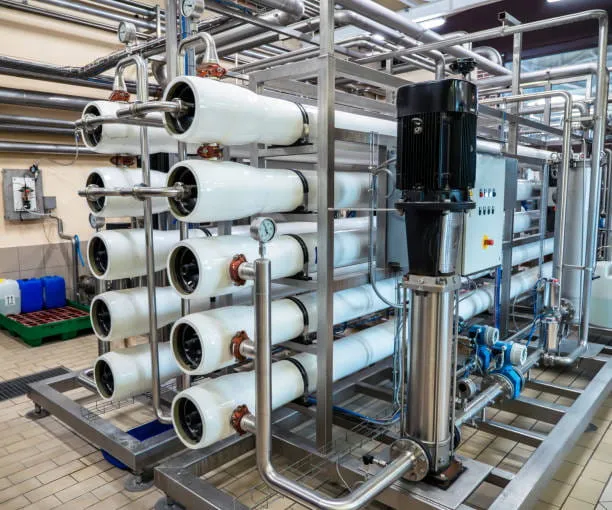
Reverse osmosis has become the backbone technology for producing high-purity water across Bangladesh's textile mills, garment factories, pharmaceutical plants, food and beverage facilities, and power stations. Unlike conventional filtration, RO removes dissolved salts and contaminants at the molecular level, making it the technology of choice wherever process water, boiler feedwater, or drinking water needs to meet strict purity targets. This guide walks through how RO actually works, what makes up a complete system, and what it takes to run one reliably in an industrial setting.
What Is Reverse Osmosis
Reverse osmosis is a membrane separation process that pushes water through a semi-permeable membrane under pressure, forcing water molecules through while rejecting dissolved salts, minerals, and most organic and microbiological contaminants. The name comes from the fact that the process reverses natural osmosis: instead of water moving toward the more concentrated solution (as it would naturally), applied pressure forces it the other way, from the concentrated feed side to the dilute permeate side.
This single mechanism is why RO is used for such a wide range of applications: the same underlying physics that desalinates seawater also produces boiler feedwater, pharmaceutical-grade water, and drinking water, with the membrane, pressure, and pretreatment specifics adjusted to the feed source and required output quality.
How RO Membranes Work
Modern industrial RO membranes are almost universally thin-film composite (TFC) polyamide membranes, wound into a spiral configuration around a central permeate collection tube. Feed water flows axially along the membrane surface while a portion continuously passes radially through the membrane layers into the permeate channel, with the remainder continuing downstream as increasingly concentrated reject water.
Rejection performance is governed by membrane pore structure and surface charge rather than a simple physical sieve: this is why RO membranes reject dissolved ions and low-molecular-weight organics that would pass straight through a conventional microfiltration or ultrafiltration membrane. Salt rejection for a properly functioning industrial membrane is typically in the high-90s percent range, though the exact figure depends on the specific membrane model, feed water chemistry, and operating conditions, and should be confirmed against the manufacturer's published specification sheet rather than assumed.
Components of an RO System
A complete industrial RO system is best understood as a sequence of stages, each protecting the one after it: raw water intake, pretreatment (multimedia filtration, softening or antiscalant dosing, and cartridge filtration), the high-pressure pump, the membrane array itself, and finally permeate collection and reject water handling. Instrumentation (pressure gauges, flow meters, and conductivity probes) is threaded through the entire train, since the system's health is judged almost entirely by what these instruments report rather than by visual inspection.
Every component in this chain exists because of a failure mode a previous stage doesn't fully address. Multimedia filtration removes suspended solids that would otherwise abrade or physically block membrane elements. Antiscalant dosing or softening addresses the dissolved hardness that would otherwise precipitate as scale once concentrated inside the membrane array. Cartridge filtration is the last physical safeguard against any fine particulate that slipped past earlier stages, protecting the membrane surface from a single damaging exposure. Skipping or under-sizing any one of these stages doesn't just risk that stage's specific failure mode: it shifts the burden onto the membrane itself, which is by far the most expensive component to replace.
Feed Water Quality
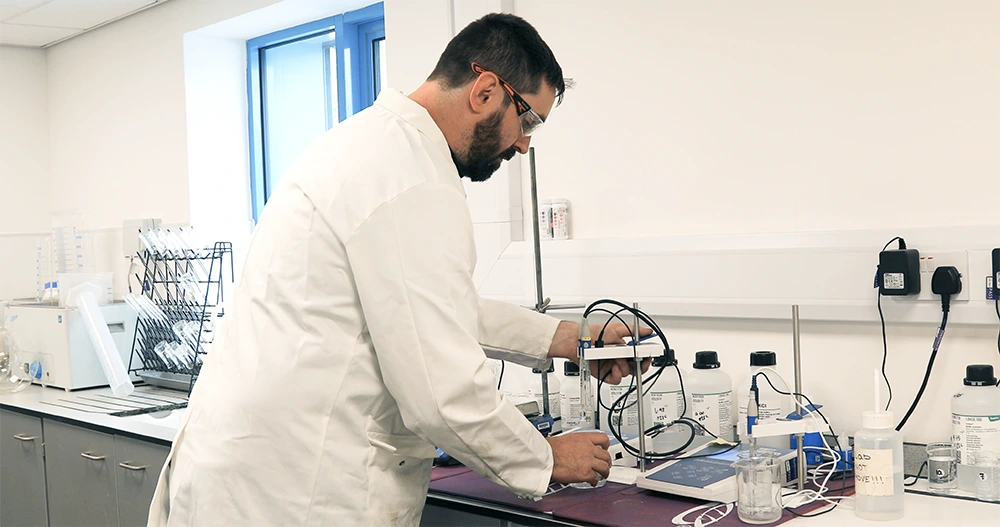
Feed water quality is the single largest determinant of how well an RO system performs and how long its membranes last. A complete feed water analysis, covering hardness, silica, iron, total dissolved solids, pH, temperature, and Silt Density Index (SDI), should be the starting point for any RO system design, since it determines the pretreatment train, the antiscalant program, and the recovery rate the system can safely target. Designing an RO system without this analysis, or relying on assumptions carried over from an unrelated site, is one of the more common root causes of premature membrane fouling.
Pretreatment Requirements
Pretreatment exists to deliver water to the membrane array that is free of the suspended solids, biological load, and scaling potential that would otherwise damage or foul the membranes prematurely. The specific pretreatment train varies with feed source: surface water typically demands more intensive clarification and disinfection than groundwater, while groundwater often carries higher dissolved iron or hardness that groundwater-fed systems must address directly. There is no universal pretreatment recipe; it is derived from the feed water analysis for that specific site.
Cartridge Filters
Cartridge filters, typically rated at 5 microns or finer, are installed immediately upstream of the high-pressure pump as the final physical barrier before the membrane array. Their role is narrow but critical: catching any particulate that has slipped through upstream clarification or media filtration before it reaches the membrane surface, where it could cause physical abrasion or accelerated fouling. Cartridge filter differential pressure should be monitored routinely, since a rising pressure drop across the cartridge housing is one of the earliest and most reliable indicators of upstream pretreatment performance degrading.
High Pressure Pumps
The high-pressure pump supplies the driving force that pushes feed water through the membrane against its natural osmotic pressure, and its output pressure is one of the most closely tracked parameters in RO operation. Required feed pressure varies significantly with feed water salinity and desired recovery rate: brackish water systems typically operate at considerably lower pressures than seawater desalination, reflecting the different osmotic pressures being overcome. A pump that is undersized for the feed water's actual salinity will struggle to maintain target permeate flow, while one that is oversized wastes energy continuously.
RO Membranes
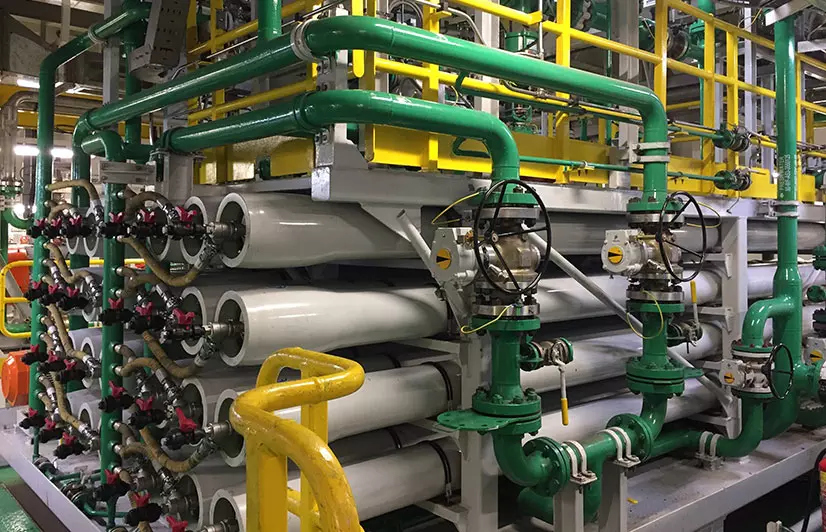
Membrane elements are typically arranged in pressure vessels holding multiple elements in series, with vessels themselves arranged in arrays that may include multiple stages to maximize overall system recovery. Element selection (standard brackish water, high-rejection, fouling-resistant, or seawater membranes) should match the specific feed water characteristics and treatment objective identified during the feed water analysis, rather than being chosen by default or convenience.
Permeate Water
Permeate is the purified water that has passed through the membrane, and its quality is monitored continuously via conductivity, since conductivity correlates directly with dissolved solids content and responds quickly to any change in membrane rejection performance. A gradual upward drift in permeate conductivity over time, even while still within acceptable limits, is a meaningful early signal worth investigating rather than dismissing, since it often precedes a more significant rejection failure.
Reject Water
Reject water (also called concentrate or brine) carries the salts and contaminants rejected by the membrane, at a concentration factor determined by the system's recovery rate. Reject water disposal is a genuine operational and, in many jurisdictions, regulatory consideration: it cannot simply be assumed away as a byproduct, and disposal method (sewer discharge, evaporation, further treatment, or reuse) should be planned during system design rather than left until commissioning.
Recovery Rate
Recovery rate is the percentage of feed water converted to usable permeate, with the remainder leaving as reject. Higher recovery reduces feed water consumption and reject volume but concentrates dissolved solids and scaling constituents more aggressively within the membrane array, meaning recovery rate and scaling risk are directly linked: a recovery target should always be evaluated against the specific feed water's scaling potential rather than set as a generic percentage.
Water Quality Parameters
Beyond conductivity, a complete RO monitoring program tracks feed pressure, differential pressure across the array, permeate flow, recovery rate, and salt rejection percentage, typically normalized against a reference temperature and pressure to allow meaningful comparison over time. Tracking raw, un-normalized values across seasons or feed temperature changes can mask a genuine performance decline or create a false alarm. Normalization is a standard industry practice for exactly this reason.
Industrial Applications
Across Bangladesh's industrial base, RO systems commonly serve boiler feedwater production (where low silica and hardness are critical), process water for textile dyeing and finishing (where consistent water quality directly affects dye uptake and fabric quality), pharmaceutical water systems (subject to their own specific purity and validation requirements beyond general industrial practice), and general facility drinking water or utility water production.
Benefits of RO Systems
RO's core advantage is consistent, high-level contaminant rejection across a broad range of feed water sources using a single technology platform, without the chemical handling and waste streams associated with ion exchange softening or demineralization at comparable scale. Operating costs are driven primarily by pressure (energy) and membrane replacement, both of which are well understood and predictable when the system is properly designed and maintained.
Common Challenges
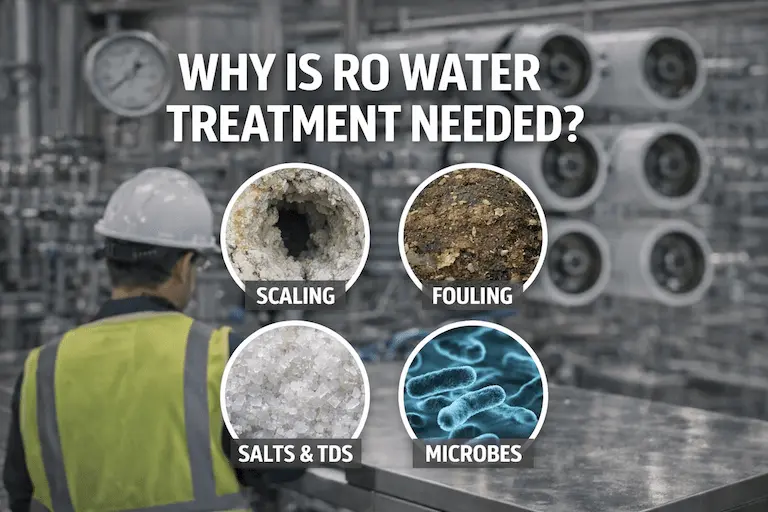
The most common operational challenges are membrane fouling and scaling (addressed in detail elsewhere in this resource center), inadequate pretreatment for the actual feed water encountered in practice versus what was assumed during design, and reject water disposal constraints that were not fully considered until after commissioning. Nearly all of these trace back to a design or pretreatment decision made without a complete feed water analysis.
Instrumentation and Automation
Most industrial RO systems today are built around a programmable logic controller that automates startup and shutdown sequencing, monitors key operating parameters continuously, and triggers alarms or safety shutdowns when pressure, flow, or conductivity readings move outside configured limits. Automation reduces the risk of operator error during startup (a sequence where ramping pressure too quickly, or admitting feed water before the system is properly vented, can cause avoidable membrane damage), but it does not eliminate the need for a trained operator to interpret trends and respond to gradual performance drift that a simple alarm threshold won't catch.
Remote monitoring, now common even on mid-sized industrial systems, allows key parameters to be logged and reviewed off-site, which is particularly useful for facilities operating multiple RO trains across different sites or shifts. The value of this data depends entirely on whether someone is actually reviewing the trends regularly: a well-instrumented system that nobody looks at until an alarm fires provides little more benefit than a manual log book.
System Sizing and Design Considerations
Sizing an RO system correctly means matching membrane area, array configuration, and pump capacity to the facility's actual peak and average water demand, not simply to nameplate flow requirements pulled from a single data point. Undersized systems run at sustained high flux, which accelerates fouling and shortens membrane life, while oversized systems carry unnecessary capital cost and can suffer their own operational issues from running well below design flow for extended periods. A proper sizing exercise accounts for seasonal demand variation, planned future capacity, and the specific feed water quality identified in the site's water analysis.
Maintenance Best Practices
- Monitor and log feed pressure, differential pressure, permeate flow, conductivity, and recovery rate on a fixed schedule, normalized against temperature.
- Maintain the antiscalant dosing program and verify actual dosing rate against the design rate periodically.
- Replace cartridge filters on a schedule driven by differential pressure, not a fixed calendar interval alone.
- Perform membrane cleaning (CIP) proactively when normalized performance data indicates early fouling, rather than waiting for a severe decline.
- Keep dated records of all testing, dosing, cleaning, and membrane replacement for trend analysis and troubleshooting.
Conclusion
A reverse osmosis system is only as reliable as the weakest stage in its pretreatment chain, and only as well-understood as the monitoring data behind it. Facilities that invest in a proper feed water analysis, size pretreatment and recovery rate to match that analysis, and track normalized performance data consistently get the long membrane life and stable water quality RO is capable of delivering, while those that treat it as a "set and forget" appliance are the ones who end up facing premature membrane failure and unplanned downtime.
Call to Action
Carbolabs Corporation's technical team can review your feed water analysis, RO system design, and current operating data to identify where performance or membrane life can be improved. Contact our engineers for a technical consultation.