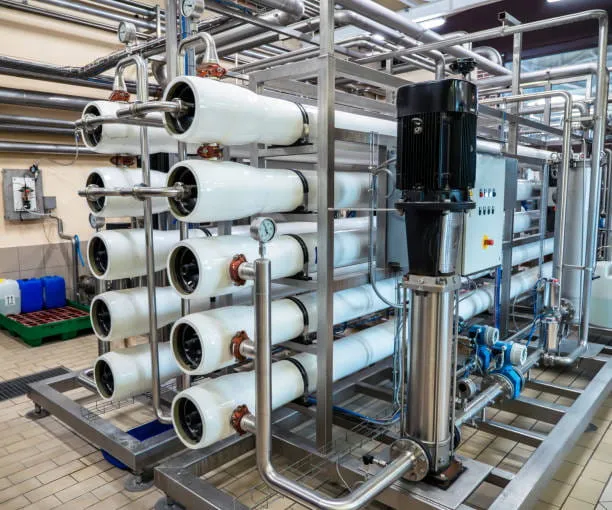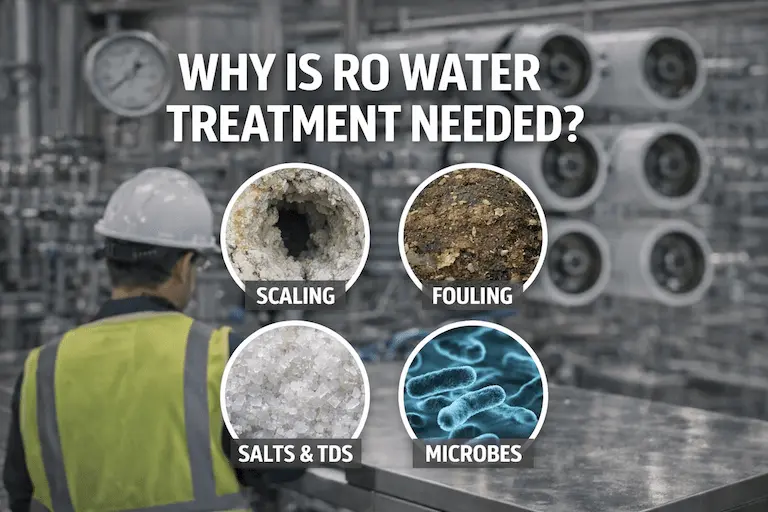
Cleaning-In-Place, or CIP, is the process that restores a fouled or scaled RO membrane closer to its original performance without removing elements from their pressure vessels. Done correctly and at the right time, CIP cleaning can extend membrane life significantly and recover most of the flow and rejection performance lost to fouling. Done poorly, at the wrong time, or with the wrong chemistry, it can fail to restore performance or even damage the membrane further. This guide walks through how a proper CIP cleaning procedure is planned and executed, from recognizing when cleaning is needed through to verifying it actually worked.
When Cleaning Is Needed
The decision to clean should be driven by normalized performance data (a sustained decline in permeate flow, a rise in normalized differential pressure, or a drop in salt rejection) rather than a fixed calendar interval alone. Cleaning too early wastes chemical and downtime on a membrane that hasn't actually fouled significantly, while cleaning too late allows fouling to become more entrenched and harder to fully reverse. Most membrane manufacturers publish trigger thresholds (typically a percentage change in normalized flow, pressure, or rejection from baseline) that provide a useful, defensible starting point for a facility's own cleaning schedule.
Identifying the Fouling Type Before Cleaning
Because different cleaning chemistries target different foulants, correctly identifying whether the dominant issue is mineral scale, organic fouling, or biofouling (using the performance data patterns and, where available, a membrane inspection) should come before selecting a cleaning solution. Cleaning with an acidic solution against what is actually a biofouling problem, for example, will generally produce limited improvement, leading a facility to conclude cleaning "didn't work" when in fact the wrong chemistry was simply applied to the wrong problem.
CIP Equipment Overview
A standard CIP skid consists of a mixing/cleaning tank, a circulation pump sized for adequate cleaning flow, a cartridge filter to protect the pump and membrane from any debris dislodged during cleaning, and a heater, since many cleaning solutions are considerably more effective at an elevated temperature within the range the specific membrane can tolerate. Facilities operating multiple RO trains benefit from having dedicated, properly sized CIP equipment on-site rather than relying on borrowed or undersized equipment that limits cleaning effectiveness.
Preparing the Cleaning Solution
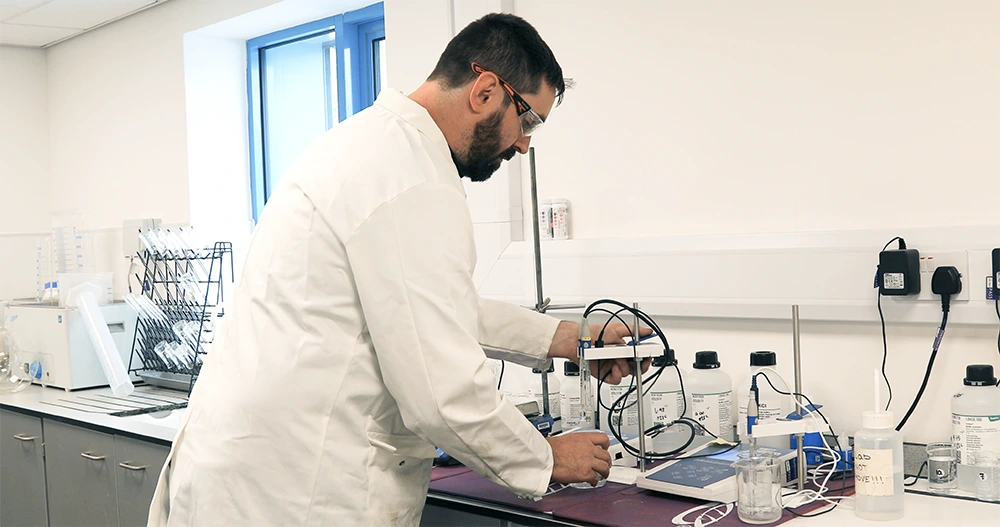
Cleaning solutions are prepared using clean water (ideally permeate from the system itself) mixed with the selected cleaning chemical at the concentration specified by the chemical supplier for the identified foulant type. Solution pH and temperature should be verified against the target range before circulation begins, since a solution prepared outside its intended range can be considerably less effective even if the correct chemical was selected.
Low-pH (Acid) Cleaning
Acidic cleaning solutions, typically based on citric acid or a similar mild organic acid for routine cleaning, are generally effective against mineral scale such as calcium carbonate by dissolving the scale back into solution. Acid cleaning should always be performed before alkaline cleaning when both are required, since reversing this order can cause certain foulants to become less soluble and harder to remove in the subsequent step.
High-pH (Alkaline) Cleaning
Alkaline cleaning solutions, often combined with a surfactant, are generally more effective against organic fouling and biofilm than acidic solutions, working by breaking down organic material and lifting it from the membrane surface. Alkaline cleaning is typically performed after acid cleaning in a two-step sequence when both mineral scale and organic or biological fouling are present, following the same soak-and-circulate procedure used for the acid step.
Circulation and Soak Procedure
A typical CIP cycle alternates between circulating the cleaning solution through the membrane array and allowing it to soak without flow for a period specified by the chemical supplier, since soak time allows the chemical to penetrate and react with foulant that continuous circulation alone may not fully contact. Circulation flow rate and duration should follow the membrane manufacturer's specific guidance, since excessive flow rate during cleaning can, in some cases, create hydraulic stress the membrane wasn't designed to handle during normal operation.
Temperature and Flow Control
Cleaning solution temperature should be maintained within the range specified for both the cleaning chemical's effectiveness and the membrane's maximum temperature tolerance, since exceeding the membrane's rated temperature limit (even briefly, and even in pursuit of better cleaning performance) risks permanent membrane damage that cleaning was meant to avoid. Flow rate should likewise stay within the manufacturer's specified range for cleaning mode, which is often different from normal operating flow.
Rinsing After Cleaning
After the cleaning cycle, the membrane array must be thoroughly rinsed with clean water to remove all residual cleaning chemical before returning to normal service, since chemical residue left in the system can affect permeate water quality or, in some cases, continue reacting with the membrane material over time. Rinse water quality and volume should follow the chemical supplier's specified rinse procedure rather than being cut short to save time.
Verifying Cleaning Effectiveness
Once the system returns to normal operation, performance should be reassessed against the same normalized parameters that triggered the cleaning decision (flow, differential pressure, and rejection), typically after allowing a short stabilization period. A cleaning that fails to meaningfully improve these parameters indicates either the wrong chemistry was used for the actual foulant, the cleaning procedure wasn't executed correctly, or the fouling has progressed beyond what CIP cleaning alone can reverse, any of which warrants further investigation rather than simply repeating the same cleaning again.
Cleaning Frequency and Recordkeeping
Keeping dated records of each cleaning event (the trigger data that prompted it, the chemistry used, and the post-cleaning performance recovery achieved) builds a facility-specific history that makes it much easier to judge whether cleaning frequency is stable, improving, or getting worse over time. A shrinking interval between cleanings, even if each individual cleaning appears successful, is itself a signal that an upstream pretreatment or dosing issue is driving the recurring fouling and deserves attention beyond the cleaning procedure itself.
Step-by-Step Cleaning Sequence Overview
A complete CIP event generally follows a consistent sequence regardless of the specific chemistry involved: isolate the membrane array from normal service, drain and flush with clean water to remove residual process water, fill the CIP tank with the prepared cleaning solution, circulate and soak according to the chemical supplier's specified cycle, drain the spent cleaning solution for appropriate disposal, rinse thoroughly with clean water until rinse water quality meets the return-to-service criteria, and finally return the array to normal operation and reassess performance. Skipping or abbreviating any single step in this sequence (particularly the initial flush or the final rinse) is a common source of reduced cleaning effectiveness or contamination of the next production run.
Spent Cleaning Solution Disposal
Spent cleaning solution carries the dissolved foulant removed from the membrane along with the cleaning chemical itself, and it should be disposed of according to the same environmental and regulatory considerations that apply to any other industrial wastewater stream, rather than assumed to be equivalent to ordinary reject water. Some cleaning chemistries also require neutralization before disposal, and the chemical supplier's guidance should be followed for both handling and disposal of spent solution.
Element-Specific Considerations
Not every membrane element in an array fouls at the same rate: lead elements in a stage typically experience the most particulate and colloidal fouling since they contact the least-treated feed water, while tail elements are more exposed to scaling as dissolved solids concentrate further along the array. Understanding this pattern helps interpret post-cleaning inspection results and can inform element replacement decisions if a specific position in the array consistently shows more severe fouling than others, independent of the cleaning program's overall effectiveness.
Developing a Standard Operating Procedure
Facilities operating RO systems long-term benefit from documenting their own site-specific CIP standard operating procedure (covering trigger thresholds, chemistry selection logic for common fouling scenarios at that site, equipment setup steps, and post-cleaning verification criteria) rather than relying on informal knowledge held by a single experienced operator. A documented procedure ensures cleaning is performed consistently regardless of which staff member is on shift, and provides a clear reference point when training new operators or when reviewing why a particular cleaning cycle did or did not restore expected performance.
Common Cleaning Mistakes
- Cleaning without first identifying the likely foulant type, leading to the wrong chemistry being applied.
- Performing alkaline cleaning before acid cleaning when both are needed, reducing overall effectiveness.
- Exceeding the membrane's rated cleaning temperature in an attempt to improve cleaning performance.
- Cutting the rinse step short to save time, leaving residual chemical in the system.
- Not verifying post-cleaning performance against the same parameters that triggered the cleaning decision.
Safety During Cleaning
CIP cleaning chemicals (whether acidic or alkaline) require the personal protective equipment specified in their safety data sheets, and operators should never mix cleaning chemicals outside of the documented procedure, since combining incompatible acidic and alkaline products can produce a hazardous reaction. Adequate ventilation in the CIP equipment area is important, particularly when heating cleaning solutions, and any cleaning solution spill should be contained and neutralized according to the facility's chemical spill response procedure rather than improvised in the moment.
Learning from Cleaning History Over Time
Beyond a single cleaning event, reviewing cleaning history across many cycles for the same system reveals patterns that a single cleaning record cannot show on its own: whether cleaning frequency is trending up despite a stable antiscalant program, whether one particular chemistry consistently outperforms another for this specific feed water, and whether performance recovery after cleaning is gradually declining cycle over cycle, which can indicate the membrane itself is approaching the end of its useful life rather than simply needing another clean. This longer-term view is what separates a facility that manages its RO system proactively from one that is only ever reacting to the most recent cleaning trigger.
Maintenance Checklist
- Track normalized flow, differential pressure, and rejection to determine when cleaning is actually needed.
- Identify the likely fouling type before selecting cleaning chemistry.
- Verify cleaning solution pH, temperature, and concentration before circulation begins.
- Follow the correct acid-before-alkaline sequence when both cleaning steps are required.
- Rinse thoroughly per the chemical supplier's specification before returning to service.
- Record cleaning trigger data, chemistry used, and post-cleaning performance for trend analysis.
Conclusion
CIP cleaning is a precise procedure, not a generic maintenance task: its effectiveness depends on correctly identifying the foulant, selecting matched chemistry, following the correct sequence and conditions, and verifying the result against the same data that triggered the cleaning decision. Facilities that treat CIP cleaning with this level of discipline consistently recover more performance per cleaning cycle and extend membrane life further than those that clean reactively without a clear procedure.
Call to Action
Carbolabs Corporation's technical team can help you identify your system's fouling type and recommend the correct CIP cleaning chemistry and procedure. Contact our engineers for a membrane cleaning consultation.